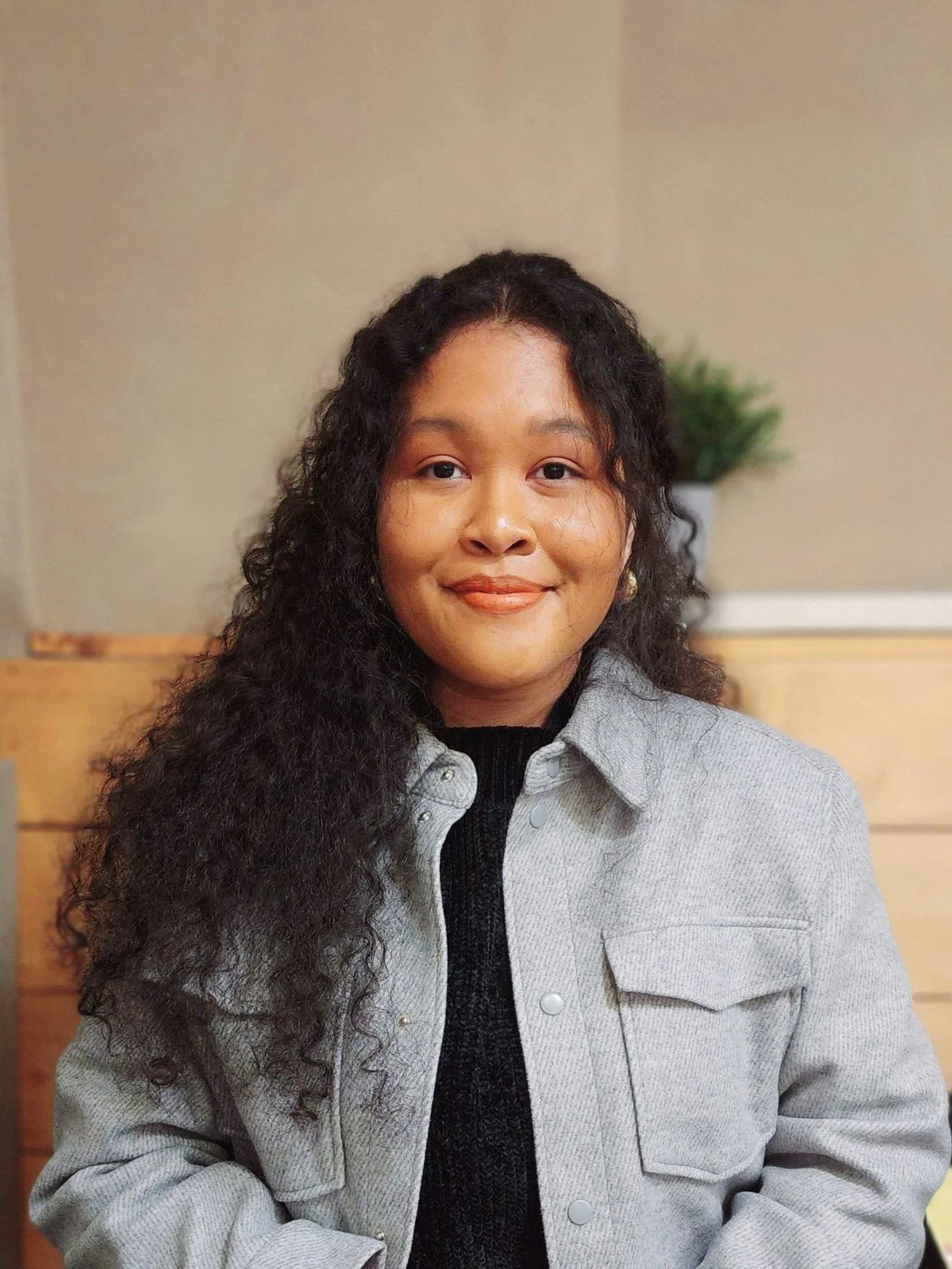
Amanda Caitlin Jones, MHC -IT
“Facilitating meaningful change through self-awareness, accountability, and compassionate understanding of the full human experience, including the parts we struggle to see.”
Professional Summary
I’m a clinical mental health counseling graduate student and behavioral health professional dedicated to supporting individuals navigating systemic barriers and complex life transitions. My work is grounded in socio-spiritual upliftment and evidence-based practice while also recognizing the importance of identity, narrative, and meaning-making in the healing process.
I approach counseling as both a clinical discipline and a transformational process. I am particularly interested in supporting individuals in developing insight, emotional regulation skills, and the capacity to understand both their strengths and their vulnerabilities without shame.
I strive to function as a change agent by helping individuals recognize patterns, develop new coping strategies, and build sustainable pathways toward personal growth and stability, especially in this ever-changing world.
Philosophy of Change and Growth
My clinical perspective is influenced by biopsychosocial and holistic frameworks, integrating evidence-based treatment with a depth-oriented understanding of human behavior.
Inspired in part by the work of Carl Jung, I believe that meaningful and lasting change often requires individuals to explore not only their strengths, but also the parts of themselves shaped by fear, trauma, shame, or survival.
In practice, this means:
Supporting clients in developing self-awareness without judgment.
Helping individuals understand how past experiences influence current behaviors.
Encouraging accountability alongside self-compassion.
Recognizing that people can hold both pain and potential simultaneously.
Supporting integration rather than avoidance of difficult internal experiences.
I believe that when individuals understand the full complexity of themselves, they are better equipped to make intentional, value-driven choices.
What Being a Change Agent Means in My Work
Being a change agent means helping create environments where people can:
Safely examine their thoughts, behaviors, and emotional patterns.
Develop insight into how survival strategies once helped, but may no longer serve them.
Learn skills that increase stability, agency, and self-efficacy.
Build compassion for themselves and others.
Move from reactive patterns toward intentional living.
Learning to let go and redirect.
I believe change is most sustainable when individuals feel seen, understood, empowered, and challenged, not fixed or judged.
Clinical Approach
I integrate:
Cognitive Behavioral Therapy (CBT) principles.
Dialectical Behavior Therapy (DBT) skills.
Trauma-informed care frameworks.
Psychoeducation and skill-building interventions.
Strengths-based and person-centered approaches.
Creative and expressive approaches, when clinically appropriate.
Areas of Clinical Interest
Trauma and trauma recovery.
Justice-involved populations.
Addictions and co-occurring disorders.
Crisis intervention and stabilization.
Identity development and self-concept work.
Community mental health.
Professional Mission
To support individuals in building insight, resilience, and emotional safety while honoring the complexity of the human experience.

Counseling Research, Program Models, and Credentials
I am completing my M.S. in Clinical Mental Health Counseling at Pennsylvania Western University, with an expected graduation in 2026, and have maintained a 3.88 GPA throughout my graduate training.
I am currently completing clinical field training at New York Counseling for Change, working in a forensic-informed behavioral health setting that supports individuals navigating complex legal and mental health systems.
My clinical training includes skill development in Cognitive Behavioral Therapy (CBT) and Dialectical Behavior Therapy (DBT), along with foundational knowledge in forensic and legal considerations within mental health care.
I am an active member of the New York Mental Health Counselors Association, supporting ongoing professional growth and ethical clinical practice.
Here is a look at some of my recent research/program models.